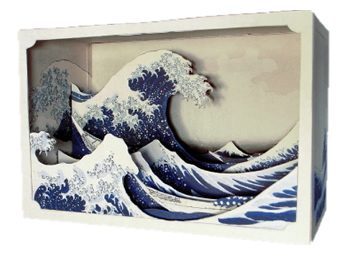
Tatenbanko is the the Japanese art of creating three dimensional perspectives from paper, dating back to the Edo Period of feudal Japan. It seems, though long forgotten, that it has been revived and Tatebanko.com out of Japan is starting to offer small kits, with it’s first offerings based on the famous woodblock printers, Hokusai and Hiroshige.
While something like this might seem just a bit ‘drull’ for some, there is a lot to be said about this sort of activity, namely the tactile interactivity and sense of peace it often brings the person doing it. Then of course there is the simple pleasure in just looking at it; a bit like those amazing 2D/3D ‘landscapes’ made from cork one used to see at Chinese restaurants that would transfix you. It’s that whole old school thing that seems to be lacking from our modern society these days.
We are not too sure about the ‘box’ it seems to be presented in but we are sure the industrious out there can do something a little more….. ‘designery’ but this is pretty cool.
We’ve been pondering whether to post this or not but decided it’s too damn cool not to.
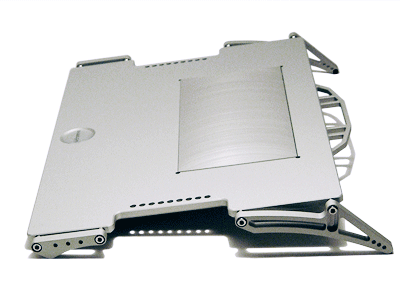
We always harp on about quality, craftsmanship and doing things that actually means something to someone. So when we find a company like Balmuda out of Japan, it gives us that little tingle because it’s a little bit of ‘old school’ in an age of mass plastic fantastic.
One has to admire lateral thinking and we love the idea of recycling. When you see something like this you realise that the whole recycle thing is just starting, all it takes are people to start thinking about things differently.
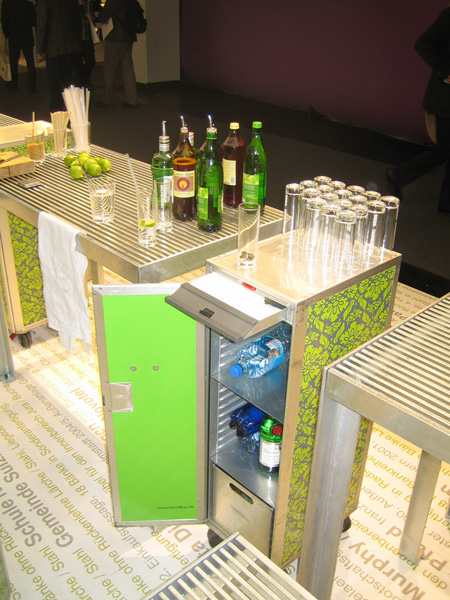
Bordbar takes the humble, used, airline food trolly warts and all, and recycles them to become a rather useful bit of furniture. Select from their range of graphics (or supply your own), then configure it with draws and shelfs, the Bordbar trolly could be just the thing to fill that difficult corner and being on wheels, you can shunt it around where you need it.
It’s a very clever use of something that otherwise might end up in a scarp yard, which would be a waste of the energy and resources that went into making it in the first place.
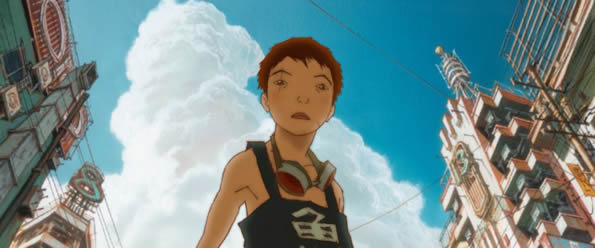
Once in a while something comes along that can only be described as special, Tekkonkinkreet is one of those things.
Based on a manga (a general term for Japanese comics) by Taiyo Matsumoto but put together by the studio that made the Animatrix, Tekkonkinkreet is possibly unlike anything you might have seen before, as it’s a interesting and visually complex blend of East meets West, throwing away what we usually consider Japanese Anime.
But it’s not just the visual of Tekkonkinkreet that catches one’s attention but the storyline itself. Centred around two young characters, Black and White, the story takes place in a grotty, crowded and on its way out ‘Treasure Town’, somewhere in Tokyo. At its most basic, Tekkonkinkreet is a story about gang turf and Yakuza, though it really is about the complex and symbiotic relationship shared between Black and White.
With an very tight soundtrack, beautiful animation and a deep and complex storyline, Tekkonkinkreet is a must see and as it went straight to DVD, there is no excuse not to grab a copy.
The problem (problem?) with big galleries, is that you have to go to them; in the case of some of the nation’s best, that means a 300 odd k drive (each way) from Sydney to see them in Canberra. While there is nothing nicer than spending time cruising the halls, it often means that most people not in the direct vicinity miss out on what’s going down.
The National Portrait Gallery though has an exhibition that comes to you, or your broadband line as the case might be.
Check out ‘Animated‘, the NPG’s first online exhibit.
Coming up with the latest and greatest bit of Experiential Design to entrance the participant is always an interesting challenge, especially when thinking about longer term prospects. TiWalkMe, could be described as taking Experiential Design to a whole new level.TiWalkMe is a 1000 year clock using trees as the guage of time. Designed to track time for a millennia and engaging multiple generations, tree plantings grow, mature and die off as they progress along a tact of land, giving an indication of time marching on.The project is guided by three main principles:
Principle 1: The slow march of trees across the Escapement must always be visible and unobstructed.
Principle 2: The Escapement must adapt to future knowledge and needs, yet remain balanced with the past.
Principle 3: TiWalkMe’s mission is to bring perspective and insight to its visitors.